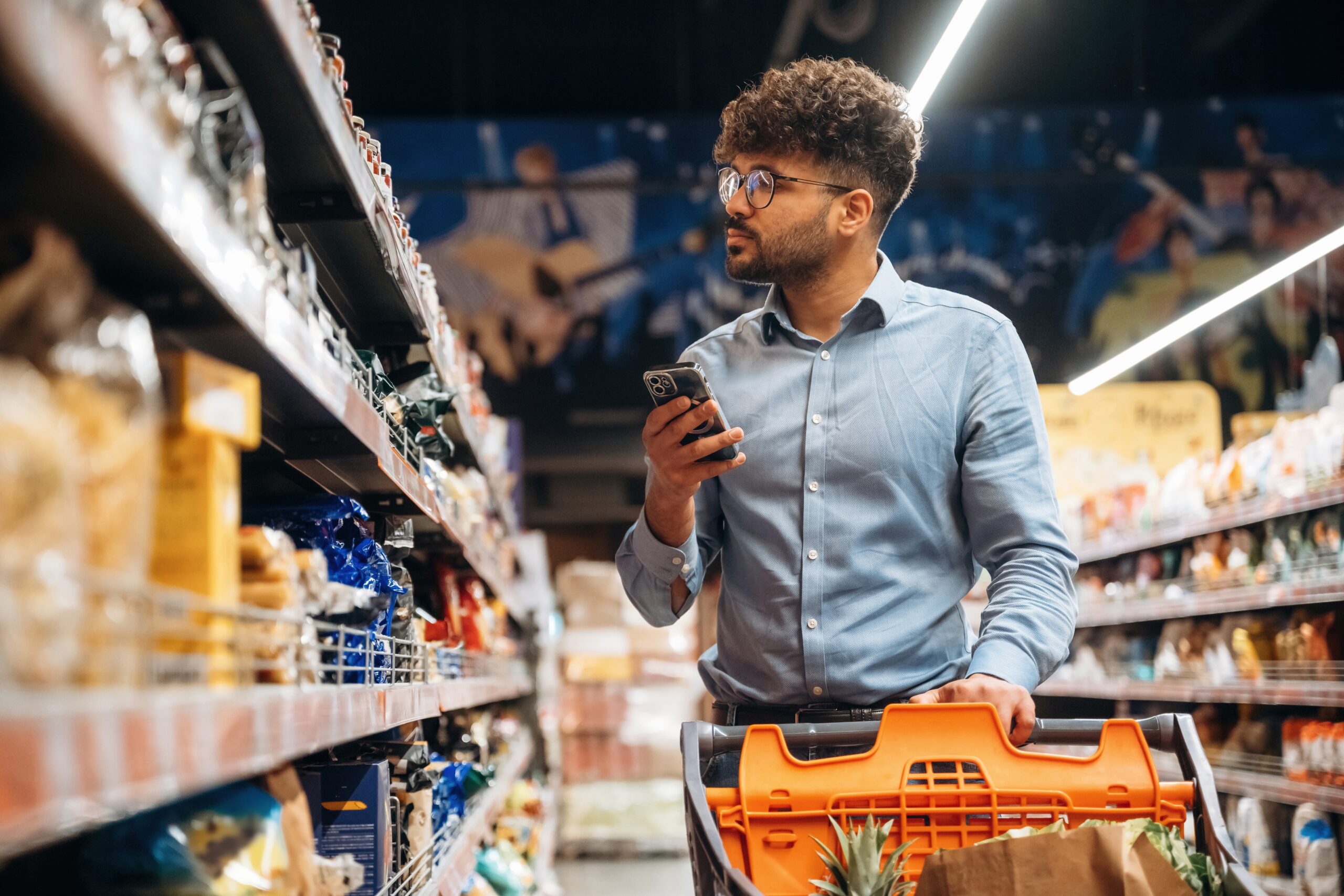

For many years, ecommerce testing and in-store testing lived in separate worlds. Different teams, different tools and approaches, and different metrics. But that model no longer fits with today’s shopper profile. That’s because shoppers now tend to move fluidly between digital and physical experiences: seeing an ad on social media, browsing online marketplaces, clipping online coupons and ultimately purchasing wherever it’s most convenient. As that behavior continues to evolve, testing must evolve with it.
The Shopper Journey Is Now Blended
We know the line between ecommerce and in-store has effectively disappeared. Retail media, paid search, and digital promotions don’t just drive online conversions—they shape what shoppers buy in-store. A sponsored product ad might lead to:
- An immediate online purchase
- A store visit later that day
- A brand switch at the shelf
Most testing strategies still measure these moments in isolation. And therein lies the issue. If you’re not testing across channels, you’re not testing how people actually shop.
Why Traditional Testing Falls Short
Legacy approaches were built for simpler, more linear journeys:
- Ecommerce teams optimize product detail pages and digital campaigns
- In-store teams focus on planograms, pricing, and execution
- Insights are reviewed after the fact
But these result in missed connections and costly blind spots. You might optimize a digital campaign that drives demand—but fail to convert in-store due to poor shelf visibility. Or refine a planogram without understanding how retail media is influencing what shoppers expect to see.
What Omnichannel Testing Needs to Become
To keep up with modern shopping behavior, testing must shift from fragmented to connected.
- From channel-specific to journey-based
Testing should reflect the full path to purchase—not just one touchpoint. - From reactive to predictive
Instead of measuring what happened, simulate outcomes before execution to reduce risk. - From isolated metrics to shared KPIs
Align ecommerce, retail media, and in-store teams around common performance goals. - From periodic to continuous
Shopper behavior is changing too quickly for one-off tests. Always-on testing is now essential.
Connecting Retail Media, Ecommerce, and the Shelf
One of the biggest gaps today is the disconnect between retail media performance and in-store reality.
CPGs are investing heavily in paid online promotions—but without understanding:
- Whether products are available and visible in-store
- How digital messaging translates to shelf decisions
- If pricing and promotions are consistent across channels
Omnichannel testing closes that gap by linking what shoppers see online to what they experience in-store.
How InContext Solutions Enables Omnichannel Testing
Bringing omnichannel testing to life requires more than just data—it requires the ability to simulate, validate, and connect decisions before they hit the market.
That’s where InContext comes in. We can test ecommerce and in-store with one digital platform, so that
teams can evaluate how concepts will resonate at the shelf, and then also test how digital media, promotions, and product content influence behavior online.
- Simulate real shopper behavior
Using digital twins and immersive 3D experiences, brands can see how shoppers respond to new in-store changes at the shelf including new products or different arrangements, before investing in execution. - Validate paid online promotions before launch
InContext can test different offers, messaging, and placements across ecommerce sites to understand what will truly drive conversion. - Bridge the gap between insight and execution
With tools like image recognition and real-time shelf visibility, teams can ensure what was tested is actually delivered in-store—closing the loop from strategy to execution. - Move faster with confidence
By combining virtual testing, AI-driven insights, and real-world validation, InContext helps teams reduce trial and error while making smarter, faster decisions.
Why This Matters Now
With this connected, closed loop approach, teams can make smarter, faster decisions that will reduce costly trial and error and deliver more consistent, effective shopper experiences. Omnichannel isn’t just a strategy—it reflects how today’s shopper interacts with your brand. InContext helps get all your analogue and digital channels interconnected, in order to meet the shopper were they’re in the journey, regardless of the channel.
The organizations that evolve toward connected, predictive, and continuous omnichannel testing will be the ones that turn insight into action—faster than the competition. Contact us to learn more!