
Staying ahead of changing grocery shopper behavior can feel like trying to catch up with a train that keeps increasing its speed. Most grocers spend months aligning category plans and coordinating resets, only to watch shopping habits morph the moment new fixtures hit the floor. Prices and promotions shift and grocery spending gets reallocated across channels faster than traditional processes can absorb.
Let’s say a team finally gets everyone on board with a sustainability‑plus‑value strategy that includes more eco‑friendly options at attractive price points and stronger store brand offerings in key aisles. The reset rolls out across dozens of supermarkets, and early reads suggest the plan is working. But within a quarter, those same grocery shoppers are splitting trips between discount formats and fresh‑forward concepts, leaning more on online grocery shopping for bulky items, and chasing new products they discover on social media. What felt like a solid read on grocery shopping behavior is already drifting out of alignment with real‑world purchasing decisions.
That’s the strategy half‑life problem. Strategy half‑life is the amount of time it takes for a plan to lose half its relevance because consumer behavior has evolved, even if the macro themes such as sustainability and value stay on the slide deck. As we head into 2026, that half‑life is measured in months, not years, especially for categories where omnichannel options, store-brand growth, and private labels are reshaping shopper behavior in real time. If shopper behavior is mutating this fast, staying ahead with annual or semiannual resets is almost impossible unless grocers bring in a new kind of decision engine: AI‑driven prediction and simulation that can read change as it happens and adjust faster than the next reset window.
Trends Aren’t the Problem; Timing Is
Everyone in the grocery industry knows the big themes by now. Sustainability is table stakes, health and wellness claims are everywhere, and headlines about inflation, tariffs, and cost‑of‑living pressures have grocery retailers and CPGs laser‑focused on savings and lower prices. Private labels and store-brand tiers continue to grow, omnichannel journeys are the norm, and digital adoption has rewired everything from shopping lists to loyalty programs to e-commerce functionality.
A failure to spot the trends isn’t the problem. The problem is how quickly the expression of those trends changes. In one neighborhood, sustainability shows up as premium organic products in the perimeter; in another, it looks like bulk packs that cut packaging waste and help stretch grocery spending. Savings might mean trading down to private labels in stock‑up trips, stacking digital coupons at Walmart or Amazon, or cherry‑picking promotions across multiple supermarkets within the same week. Gen Z and millennial shoppers may chase new products they see on social media, while older respondents stick to familiar brands but change where they buy them. Staying ahead of evolving consumer behavior is less about guessing the next buzzword and more about tracking how these same themes morph every few months in your specific stores, for your specific shoppers.
Why Grocery Shopper Behavior Is Changing So Fast
Economic volatility and value trade‑offs
Grocery shopper behavior is evolving so quickly because the ground under shoppers’ feet keeps moving. Economic volatility forces households to continually reconsider brands and trip patterns to optimize their grocery spending. In one 2025 study, more than a third of respondents said they had shifted more of their grocery spend to dollar or discount stores in the prior year, with two‑thirds pointing to lower prices as the main reason—a big channel shift in a very short window. Under the surface, shoppers are constantly making trade‑offs. Many are trading down to private labels or store brand options in center‑store categories to free up room for wellness‑oriented items, fresh foods, or occasional splurges elsewhere. Even once‑loyal shoppers are more willing to switch brands when prices move or promotions disappear, which reshapes purchasing behavior across consumer packaged goods without warning.
Changing Demographics and Lifestyles
Demographic and lifestyle shifts compound that. Hybrid work blurs weekday and weekend shopping trips, and Gen Z and millennial consumers are delaying life milestones, which alters household size and when and how often they go grocery shopping. That means fewer “standard” households and more fragmented routines, making it harder for grocers to rely on traditional assumptions about who shops when and for what.
Omnichannel Options and Digital Tools
At the same time, structural changes in the grocery market are giving people more ways to express those pressures. A rising variety of store formats means shoppers can hop among discount stores, traditional supermarkets, and convenience‑oriented small boxes within a single week instead of locking into one primary grocery store. Online grocery shopping, grocery delivery, and curbside pickup have normalized omnichannel behavior, so the same shopper might buy heavy staples online, fresh items in‑store, and impulse treats via a quick‑trip format, all nudged by personalized offers, app notifications, and the ability to check prices in real time. Omnichannel offerings also enable shoppers to easily manage shopping lists and clip coupons, as well as compare loyalty rewards across grocers, which continually reshapes purchasing decisions and in‑store experiences.
Cultural and Information Churn
Layered on top of that is constant information and cultural churn. Social media drives fast‑moving cycles around plant‑based eating, protein‑heavy diets, “better for you” snacks, and sustainability messaging, which encourages experimentation and shortens the life of any single configuration on the shelf. A recent article from Grocery Dive on digitally engaged grocery shoppers found that a majority now encounter food and grocery content from influencers or brands in their TikTok and other feeds every day, and more than half have made grocery or household purchases directly from social media or live‑streaming platforms. Shoppers absorb health and lifestyle advice from creators, making their shopping behaviors more fluid and less anchored to long‑held routines. These overlapping forces accelerate the pace of change, effectively shortening the half‑life of any strategy that quietly assumes grocery shoppers will behave the same way for an entire year.
How Shopper Behavior Actually Changes on the Ground
The most visible shifts show up in the missions that drive grocery shopping. Short, highly intentional trips aimed at just a few fresh items are growing faster than big weekly stock‑ups, which changes how traffic flows through the grocery store and which products get seen. More mission stacking—grabbing dinner, a treat, and household essentials in a single fast visit—forces grocery shoppers to juggle competing priorities inside one basket, from healthy choices to indulgences to items that simply fit the budget. Those evolving shopping behaviors make it harder for grocers to predict which categories will matter most on any given trip.
All of this scrambles how performance shows up in the numbers. A category can look flat in one chain or store format because more of the volume has quietly moved into quick‑trip missions or online baskets, even if shoppers are actually buying more overall across channels. The same shopper might be buying your brand more often, but in smaller quantities and across more missions, so traditional reads on share and loyalty no longer tell the full story. For grocers, that makes it harder to tell whether a plan is failing or if shopper behavior has simply shifted to places the current reports are not designed to see.
Why Traditional Resets Can’t Keep Up
Traditional category planning was built for a slower grocery market. Annual or semiannual reviews and long survey cycles sufficed when shopper behavior and prices were relatively stable year to year. Teams would analyze the previous year’s data, agree on new marketing strategies and assortments, and then wait to see what happened. This cadence assumed the world—and the shopper—would look roughly the same by the time the plan hits the shelf.
That assumption no longer flies. If the half‑life of your strategy is only a few months but your decision cycle runs 9–12 months, you are always optimizing against a shopper who no longer exists. By the time results arrive from an in‑store test or a traditional survey, customer preferences may have shifted again, and Walmart, Amazon, and competing supermarkets have already refreshed their plans. Each reset becomes a high‑stakes, slow‑moving bet placed on stale behavior.
This results in a persistent lag for grocery retailers who see performance issues only after they have compounded, and who must wait for the next reset window to respond. To truly stay ahead of changing grocery shopper behavior, teams need a way to observe, test, and adapt at the speed shopping habits are evolving.
How AI Predicts Grocery Shopper Behavior
To truly stay ahead of changing grocery shopper behavior, teams need a way to see around the corner. That is what predictive, retail‑specific AI does. Instead of relying only on last year’s POS reports, behavioral AI learns from millions of shopping trips—how different shoppers move through the aisles, what they notice, and what they ultimately buy—to forecast how changes in prices, assortment, messaging, or layout will affect sales and loyalty.
InContext’s Arrangement AI is built on an exclusive data lake of more than 2 million virtual shopping trips, captured through years of shopper research in digital store twins. The model ingests these observations, finds patterns across banners and missions (for example, how value‑seeking families respond when private labels gain space or how health‑oriented singles respond when sustainability messaging moves to eye level), and then generates concrete, scenario‑based predictions along the lines of “if you make these specific planogram changes, here is the expected category and brand sales impact.” Because the AI is continuously updated with fresh behavior data, its recommendations reflect how shoppers are acting now, not how they behaved a year ago. That turns what used to be a static annual plan into a living strategy that can be rescored and adjusted as quickly as the market changes.
Using Digital Twins and Simulation to Stay Ahead
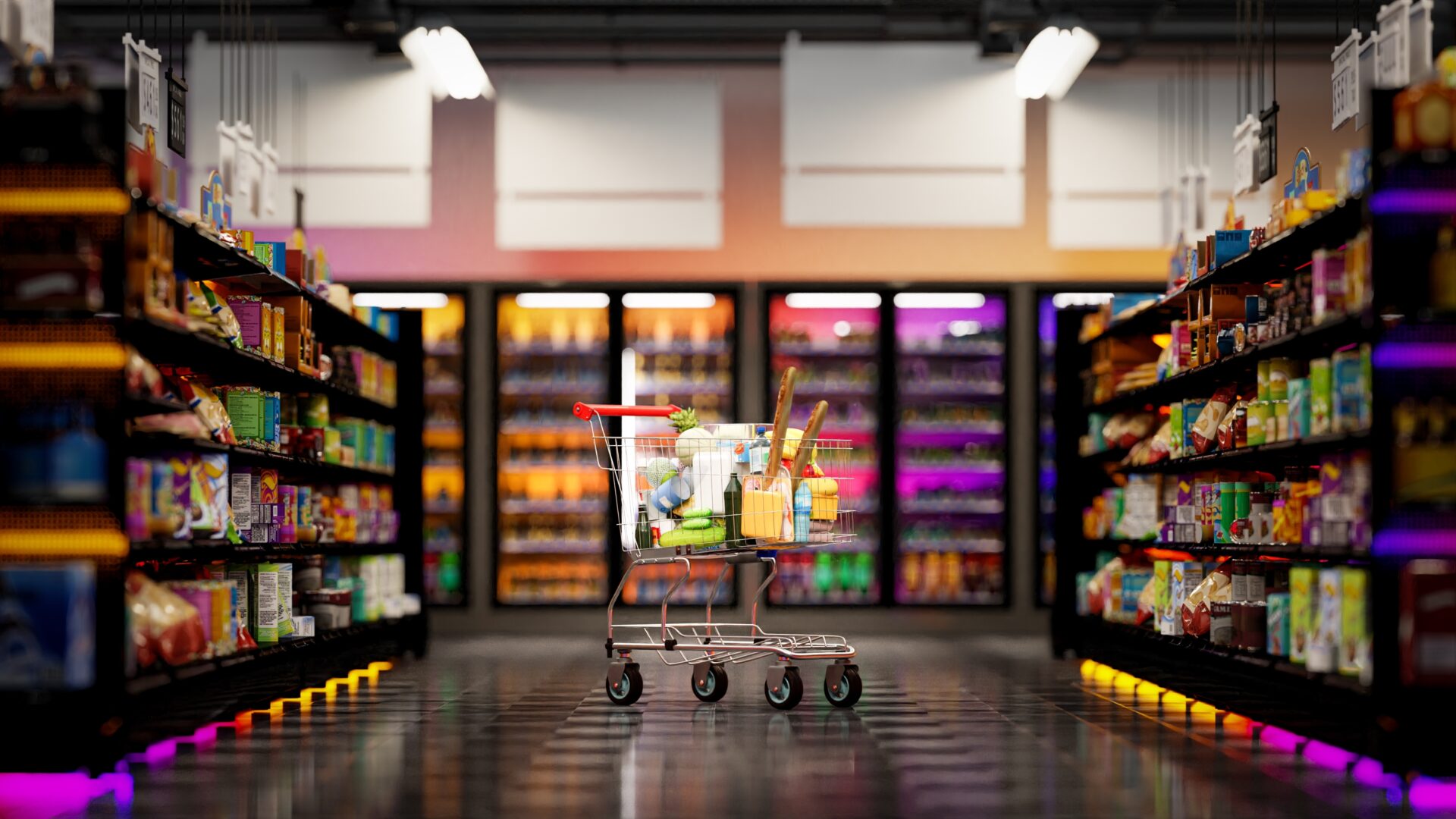
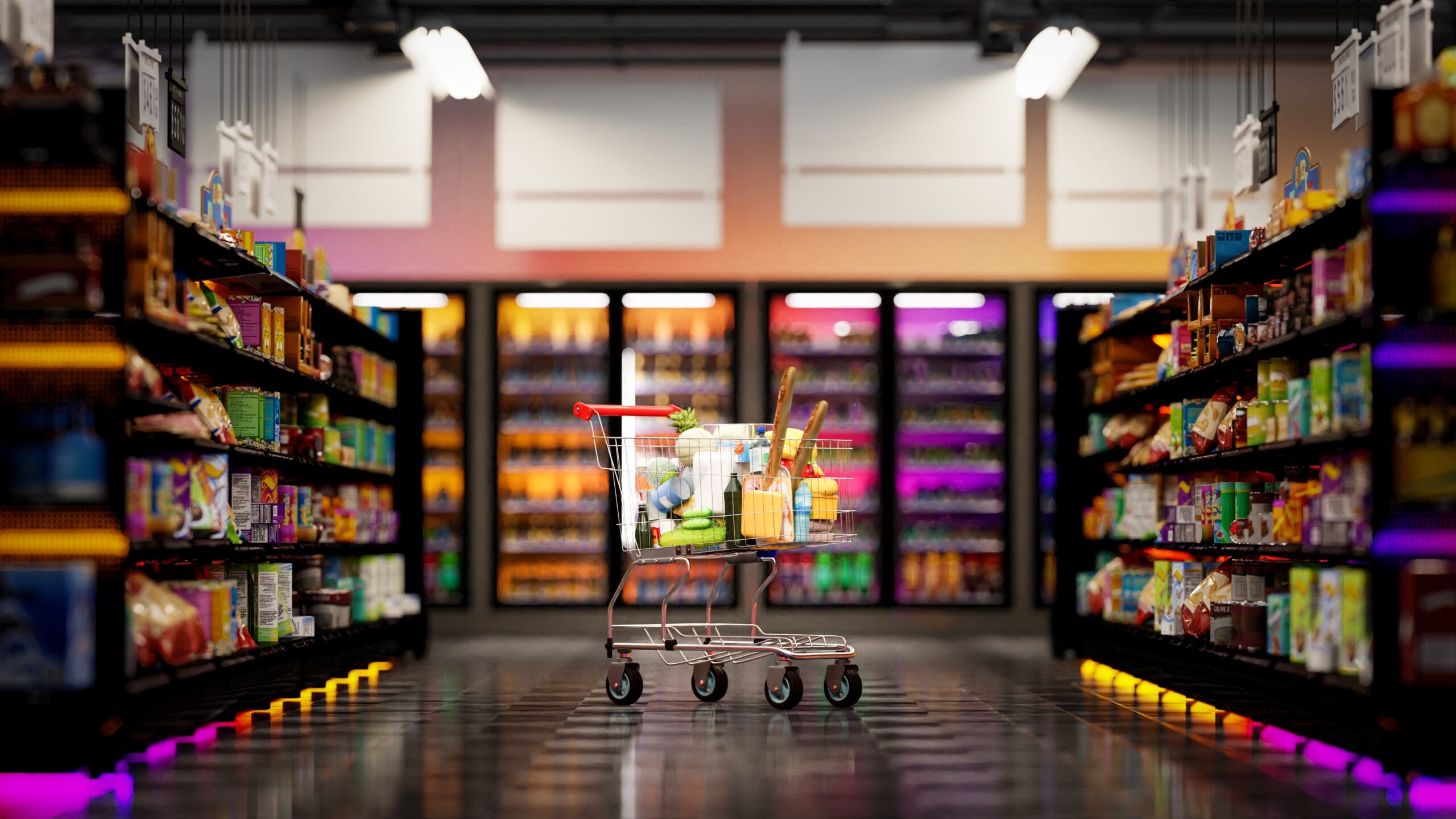
A bonus power of Arrangement AI comes from how it works hand in hand with InContext’s ShopperMX virtual store platform. ShopperMX provides highly realistic 3D digital twins of stores and categories, where teams can visualize new assortments, endcaps, signage, and price architectures before a single item is moved in the real world. Shopper insights teams can expose thousands of virtual shoppers to different planograms and price points, then see how those scenarios change path‑to‑purchase and conversion with a 96% correlation to real‑world behavior.
Every one of those virtual tests becomes fuel for the AI. The behavioral data, including what shoppers see, skip, compare, and buy under various conditions, flows back into Arrangement AI’s prediction models, which sharpens future recommendations. That loop means grocers can pressure‑test “what if” scenarios around tariffs, new products, promotions, or value vs. premium mixes inside a ShopperMX digital twin, then use Arrangement AI to quickly identify which options are most likely to deliver the highest sales lift and better in‑store experiences. VR is not a distraction from AI here; it is the engine that creates rich, realistic data so the AI can move faster and be more precise.
What Staying Ahead Looks Like in Practice
In practical terms, staying ahead of changing grocery shopper behavior with AI and virtual simulation looks like this:
- Continuous micro‑resets instead of big changes. Use Arrangement AI to rank planogram options by expected sales lift and shopper impact, then roll out the top two or three changes per category each cycle instead of waiting for a single annual reset.
- Mission‑ and banner‑specific playbooks. Use ShopperMX to test layouts, assortments, and price ladders for quick trips, stock‑ups, and fill‑ins across formats, then let Arrangement AI surface the best‑performing combinations for each mission and store type.
- Always‑on scenario planning. Run virtual tests in ShopperMX around likely shocks—new tariffs, competitive promotions, emerging sustainability claims—so that when signals appear, you already have AI‑backed, pre‑validated playbooks ready to deploy.
Instead of reacting months after behavior has shifted, teams using InContext’s ShopperMX platform and Arrangement AI can ideate, evaluate, and activate new ideas in days, at a fraction of the cost and risk of traditional in‑store testing. That is how you move at the same speed as your shoppers and finally stay ahead of changing grocery shopper behavior with AI, rather than scrambling to catch up after the next reset window.
Get Started with InContext Today
If your team is feeling the half‑life of your current plans, it’s time to test a different way of working. InContext’s ShopperMX and Arrangement AI give you a risk‑free virtual store, predictive customer analytics built on millions of shopping trips, and a faster path from idea to in‑store change. To see how you can stay ahead of changing grocery shopper behavior with AI, without blowing up your reset calendar or your budget, reach out to InContext today for a walkthrough of what’s possible in your categories.